
Digital Marketing
Digital Marketing and Social Media Management: A Real Career, Not a Side Hustle
June 15, 2026 · 4 min read
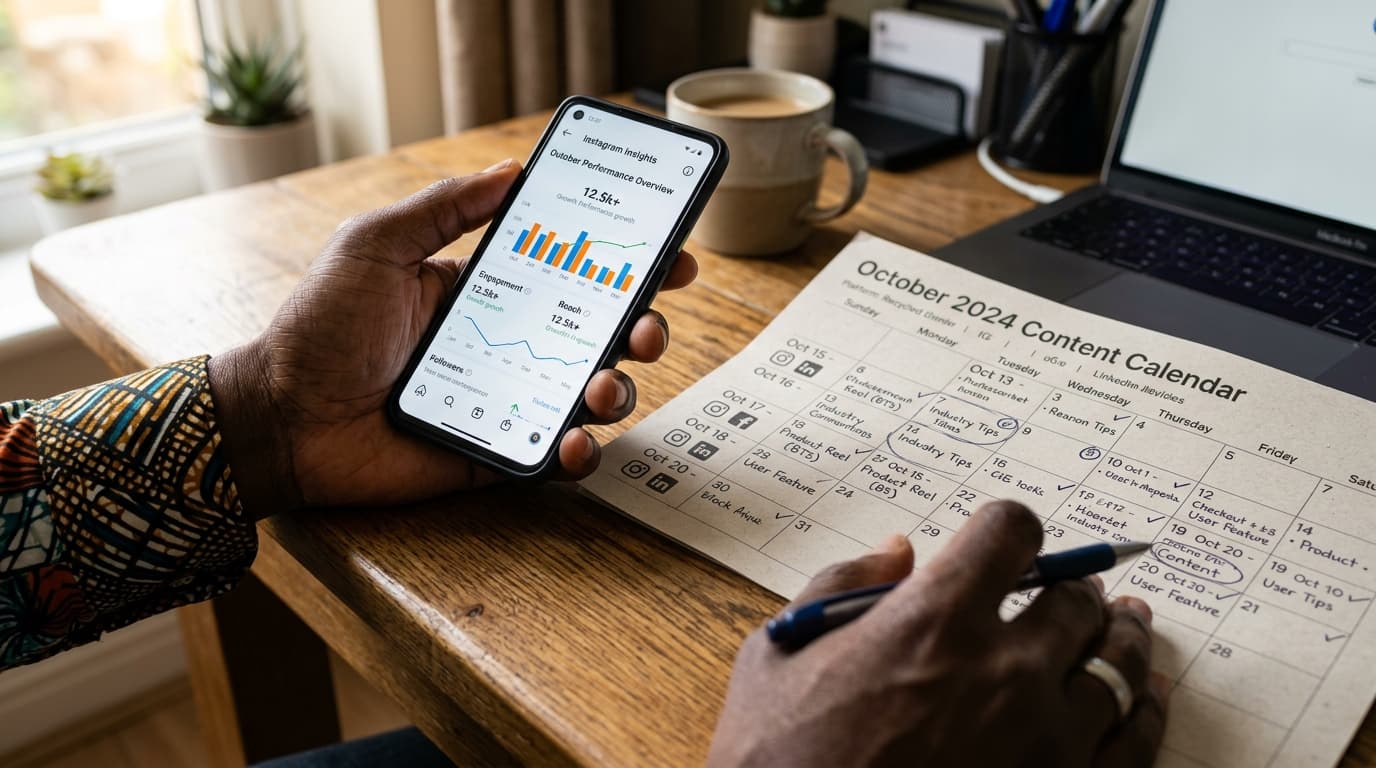
Ask most small business owners in Nigeria who manages their Instagram page, and the honest answer is usually "whoever's free" or "me, badly, at midnight." Digital marketing and social media management have quietly become one of the biggest skill gaps in the local business landscape, not because businesses don't want an online presence, but because doing it well is a genuine skill, not a task you hand to whoever happens to have a smartphone.
That gap is exactly why this has become one of the more practical, fast-moving career paths into tech-adjacent work, accessible, in demand, and directly tied to revenue a business can see.
Digital marketing is bigger than "posting content"
A lot of self-taught social media managers stall out because they think the job is content creation. Content is one piece of a much larger system. A real digital marketing skill set includes:
- Social media strategy — knowing which platform actually fits a specific business's audience, instead of running the same content everywhere.
- Content planning and copywriting — captions, ad copy, and messaging that's built around what actually gets someone to act, not just what looks nice.
- Paid advertising — running and optimizing Facebook, Instagram, and Google ad campaigns, including budget management and audience targeting.
- SEO fundamentals — helping a business's website and content actually get found in search results, not just social feeds.
- Analytics — reading engagement and conversion data to know what's actually working, and cutting what isn't.
A business owner posting daily without any of these underlying skills is doing unpaid content creation, not marketing. The skill and the value a trained digital marketer brings, is in the strategy and measurement layered underneath the posts.
Why this field rewards people who can learn fast
Platforms and algorithms change constantly, what worked on Instagram a year ago doesn't necessarily work today, and TikTok's rise reshaped short-form content strategy across every other platform almost overnight. This makes digital marketing one of the more dynamic tech-adjacent fields, and one where staying current matters more than a static certificate.
The upside: it's also one of the more accessible fields to enter with no prior technical background. Someone with strong writing skills, a good eye for design, or genuine curiosity about consumer behavior often has a real head start, even without any coding knowledge at all.
The tools worth actually learning
- Meta Business Suite for managing and advertising across Facebook and Instagram from one dashboard
- Canva or a similar design tool for producing consistent, on-brand visual content quickly
- Google Analytics for understanding website traffic and where it's actually coming from
- A scheduling tool like Buffer or Later, for planning and posting consistently instead of scrambling daily
- Basic email marketing platforms, since email remains one of the highest-ROI channels most small businesses ignore entirely
What makes a portfolio credible in this field
Unlike web development, where a finished project speaks for itself, digital marketing portfolios need to show results, not just output. A prospective employer or client wants to see: this campaign grew an account's engagement by a measurable amount, this ad spend generated this many leads, this content strategy shifted a page's reach in a specific direction.
For beginners without a paying client yet, the fix is straightforward: run a real campaign for a real (even small) business, a friend's shop, a family business, a local service provider, and document the before-and-after numbers honestly. One well-documented case study with real metrics is worth more in an interview than a dozen posts with no measurable outcome attached.
Where this leads
Digital marketing and social media management skills translate directly into freelance work, in-house roles at businesses of every size, and agency positions, and increasingly into hybrid roles that blend marketing with e-commerce management, since so many small businesses now sell directly through social platforms. For someone looking for a fast, practical entry into a growing field without first needing to learn to code, this is one of the clearest paths available, provided it's learned as a real discipline, strategy, execution, and measurement, rather than as a collection of posting habits.



Enjoyed This?
See it as a full track, not just an article
Book a free session and we'll show you where this fits in a real, mentor-led curriculum.