
Graphics Design
Graphics Design and Video Editing: The Creative Skills Businesses Will Always Need
May 5, 2026 · 4 min read
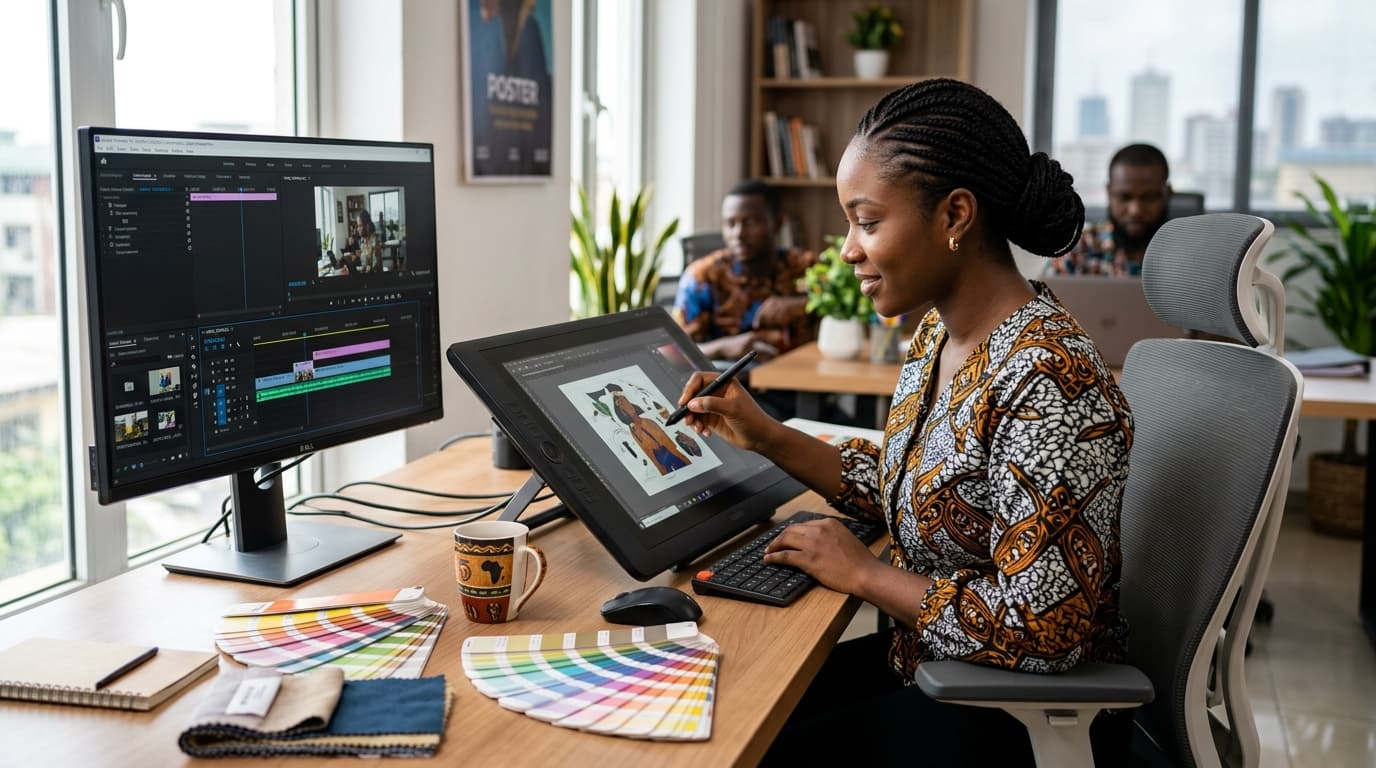
Every business, no matter how small, eventually needs something designed, a logo, a flyer, a product photo cleaned up for Instagram, a short video advertising a new arrival. Very few of them have anyone on staff who can actually do that work well, which is exactly why graphics design and video editing remain two of the most consistently in-demand creative skills, freelance or full-time, regardless of what's trending in tech.
Why these skills haven't been automated away
AI design and editing tools have gotten genuinely useful over the past few years, and it's fair to ask whether that makes learning design or editing pointless. In practice, the opposite has happened: these tools have raised the baseline expectation for visual quality across every business's marketing, which means the actual skill, knowing what looks right, what a brand needs, how to tell a story visually, has become more valuable, not less. A tool that can generate a hundred logo options in a minute still needs a trained eye to pick the one that actually works and refine it into something usable.
What real graphics design skill looks like
Graphics design is often mistaken for "knowing Photoshop," the same way people mistake knowing HTML for knowing web development. The software is the instrument, not the skill. Real graphics design competence includes:
- Design principles — color theory, typography, spacing, and visual hierarchy. These are what separate a design that looks intentional from one that looks like it was thrown together, regardless of which software produced it.
- Brand consistency — understanding how to design within a brand's existing visual identity rather than just making something that looks nice in isolation.
- Tool fluency — practical, efficient command of tools like Adobe Photoshop and Illustrator (or free alternatives like Canva and GIMP for those starting out), so execution doesn't slow down good ideas.
- Client communication — translating a client's vague brief ("make it pop," "something modern") into a concrete design direction, which is a skill in itself, separate from the software.
What real video editing skill looks like
Video editing has exploded in demand alongside the rise of short-form content, Reels, TikTok, YouTube Shorts, but the fundamentals go well beyond trimming clips and adding captions:
- Pacing and rhythm — knowing when a cut should be fast versus when a shot needs room to breathe, which is closer to a musical sense than a technical one.
- Color grading — adjusting footage so it looks polished and consistent, not just "correct."
- Sound design — music selection, sound effects, and audio levels, which most beginner editors underestimate badly. Poor audio ruins a video faster than poor visuals ever will.
- Platform-specific editing — a video built for YouTube's long-form audience needs a completely different pacing and structure than one built for a fifteen-second TikTok, and knowing the difference is what separates a hobbyist from a professional.
Why this pairs so naturally with other business skills
Graphics design and video editing rarely exist in isolation from the rest of a business's marketing. A designer who also understands basic social media strategy, or a video editor who understands what actually drives engagement on a given platform, becomes dramatically more valuable than someone who only executes a brief handed to them. This is one reason these skills combine so well with digital marketing training, the ability to both create the content and understand why it works commercially is a genuinely rare, well-compensated combination.
Building a portfolio without waiting for paying clients
The most common reason beginners delay starting is the belief that they need real client work first to build a portfolio. In practice, the opposite order works better: design a full brand identity for a fictional business, edit a short promotional video for a product that doesn't exist yet, redesign the social media presence of a real local business without being asked (with permission, of course). A strong self-directed portfolio piece demonstrates capability just as convincingly as paid work, and it's the fastest way to start attracting the paid work that follows.
A durable, flexible career path
Graphics design and video editing offer something increasingly rare in tech-adjacent fields: genuinely flexible, freelance-friendly work that doesn't require a computer science background, a specific credential, or years of ramp-up time before the first paying project. For creatively minded beginners looking for a fast, practical entry point into a skill businesses will always need, few paths offer a shorter distance between "I'm learning this" and "someone is paying me to do this."


Enjoyed This?
See it as a full track, not just an article
Book a free session and we'll show you where this fits in a real, mentor-led curriculum.