
Kids & Teens
From Screen Time to Skill Time: Why Every Parent Should Consider a Summer Tech Bootcamp
April 18, 2026 · 4 min read
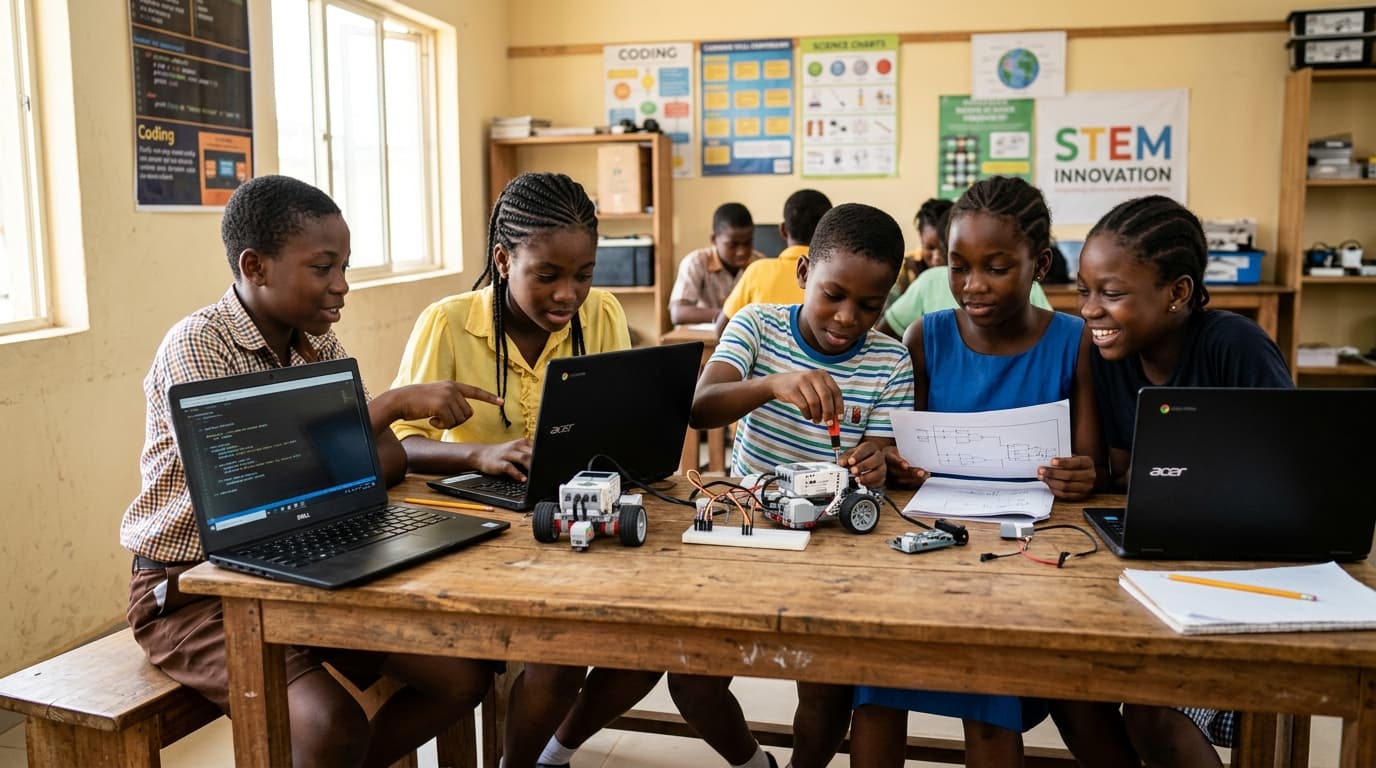
Every long school holiday, parents run into the same quiet dilemma: kids are home, screens are the default entertainment, and by the third week, that screen time has stopped feeling productive in any sense. It's rarely about restricting technology, most parents know their kids will end up on a device regardless. The real question is what that time is actually building toward.
That's the exact gap a summer tech bootcamp is built to close: not less screen time, but better screen time, structured, guided, and pointed toward skills a child will actually carry forward, long after the holiday ends.
Why the early exposure matters more than people assume
There's a persistent myth that coding and technology are subjects best left until secondary school or later, once a child is "old enough" for something technical. In practice, the opposite tends to be true. Younger children often pick up the logical thinking behind programming faster than adults do, precisely because they haven't yet built up the fear of getting it wrong that slows so many adult beginners down. A six-year-old dragging blocks together to make a character move on screen is doing the same core logical reasoning, sequence, cause and effect, trial and error, that underlies real programming, just in a form built for their age.
Starting early doesn't mean pushing a child toward a specific career at age eight. It means building comfort and confidence with technology and logical thinking early, the same way early exposure to reading builds comfort with language long before a child understands grammar.
What a well-run summer bootcamp actually covers
A genuinely useful children's tech bootcamp goes well beyond "typing and using a computer." A strong curriculum, appropriately paced for different age groups from early childhood through the teenage years, typically spans:
- Coding & Programming — age-appropriate introductions to programming logic, from visual block-based tools for younger children through to real code for older teens.
- Robotics — building and programming physical robots, which makes abstract programming concepts concrete and immediately rewarding for younger learners especially.
- Logical Thinking — structured problem-solving exercises that build the reasoning skills underneath every technical subject, not just coding.
- Digital Creativity — using technology to create, not just consume: digital art, basic design, simple animations and games.
- AI Literacy — age-appropriate understanding of what artificial intelligence actually is and how it works, increasingly essential as AI tools become a normal part of daily life for this generation.
Why the age range matters
A single, one-size-fits-all tech camp for "kids" tends to underserve everyone in it, content too advanced for a five-year-old, or too basic to hold a sixteen-year-old's attention. A bootcamp genuinely built for a wide age range, from early childhood through the late teens, needs distinct tracks: playful, hands-on, visual learning for the youngest participants, and real, employable skill-building, actual coding, actual design tools, for teenagers old enough to start thinking about future study or career paths.
For teenagers specifically, a well-structured summer bootcamp can double as an early, low-pressure introduction to a potential career path, well before they need to commit to a university course or professional direction.
The case for onsite and online options
Not every family is in a position to drop a child off at a physical location every day for six weeks, and not every child learns best sitting through a fully virtual program either. Programs that offer both onsite and online formats give parents the flexibility to choose what actually fits their family's holiday, without forcing a compromise on the quality of instruction either way.
What parents actually notice afterward
The most common feedback from parents after a structured summer tech bootcamp isn't really about the specific skills learned, though those matter. It's a shift in how a child approaches problems, more willing to try something and fail at it first, more curious about how things work underneath the surface, more confident sitting in front of a keyboard instead of intimidated by it. Those are the habits that make the next thing a child learns, technical or not, easier to pick up.
Screen time was always going to happen this holiday. A structured summer bootcamp is simply the difference between that time disappearing into passive scrolling and that same time building a skill, a habit, and a little more confidence that carries into the school year that follows.



Enjoyed This?
See it as a full track, not just an article
Book a free session and we'll show you where this fits in a real, mentor-led curriculum.